
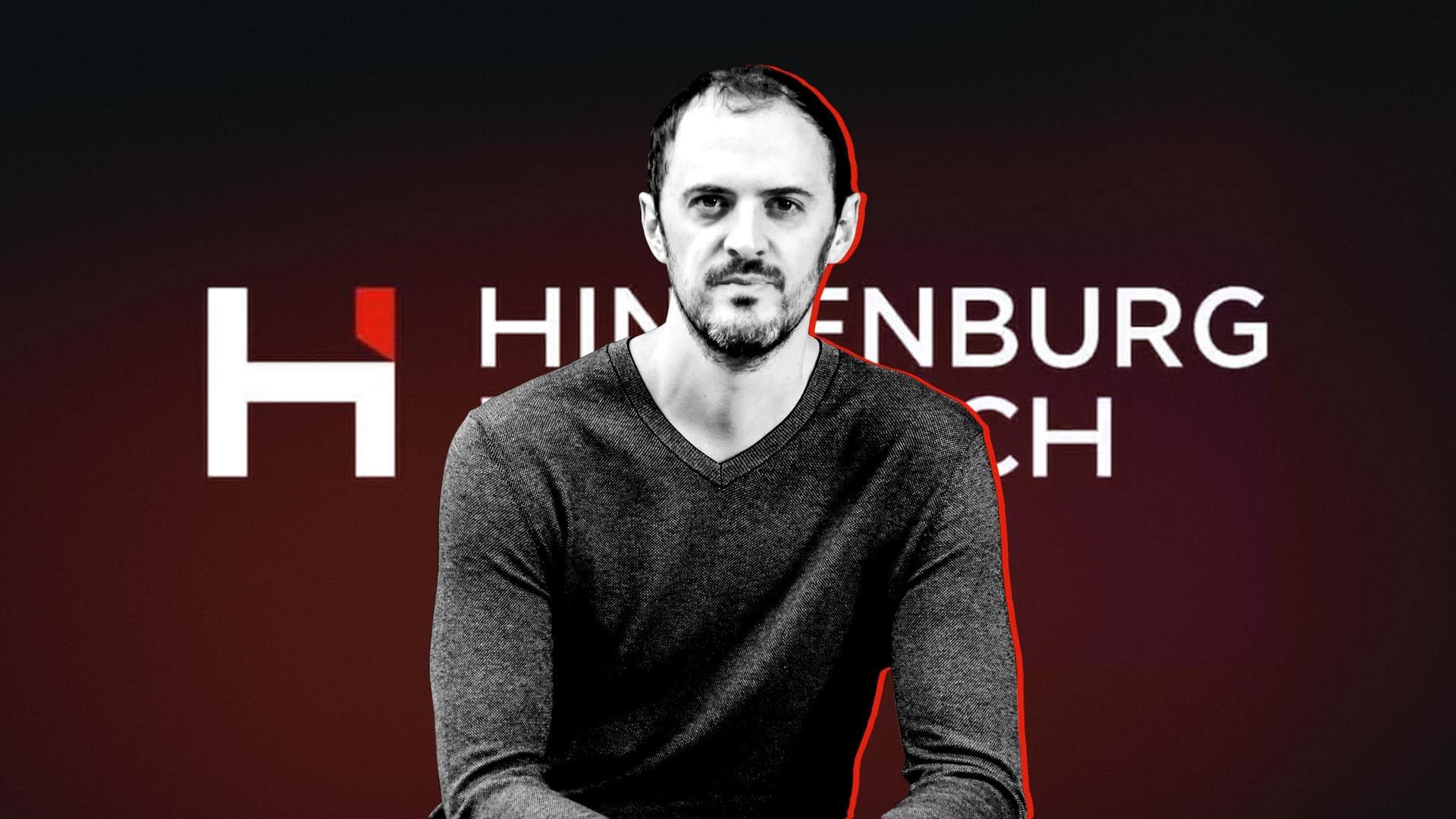
Introduction: What Is Hindenburg Research LLC?
Hindenburg Research LLC was a United States–based forensic financial research and activist short-selling firm founded in 2017. Headquartered in New York City, the firm became globally recognized for publishing deeply investigative reports that alleged corporate fraud, accounting manipulation, governance failures, and valuation distortions in publicly traded companies.
Unlike traditional hedge funds or asset managers, Hindenburg Research operated as a specialized investigative research entity that monetized its work by taking short positions in companies prior to releasing public reports. Its research frequently triggered large stock price declines, regulatory investigations, executive resignations, and in several cases, criminal prosecutions.
Between 2017 and its closure in 2025, Hindenburg Research influenced hundreds of billions of dollars in market capitalization, reshaped global discussions around activist short selling, and forced institutional investors to rethink due diligence standards.
Company Profile and Corporate Structure
Legal Name: Hindenburg Research LLC
Founded: 2017
Headquarters: New York City, United States
Business Type: Private limited liability company
Ownership: Privately held
Estimated Staff Size: 10–15 researchers, analysts, investigators, legal consultants
Founder: Nathan (Nate) Anderson
Hindenburg Research operated with a deliberately lean structure. The firm avoided large overhead costs, external capital commitments, or marketing expenses. Instead, resources were concentrated on research infrastructure, data acquisition, legal vetting, and trade execution.
The company did not manage public investment funds or client portfolios. It functioned as a proprietary research and trading organization that partnered selectively with institutional investors on profit-sharing arrangements.
This structure allowed Hindenburg to remain agile, independent, and insulated from investor redemption pressure that often affects hedge funds during volatile market conditions.
Why the Name "Hindenburg"?
The firm's name references the Hindenburg airship disaster of 1937, one of the most infamous engineering catastrophes in modern history. The metaphor was intentional: a highly visible structure fueled by flawed assumptions that ultimately collapsed dramatically.
Hindenburg Research positioned itself as an entity designed to identify similar structural failures inside corporations before markets fully recognized the risk.
Founder: Nathan Anderson
Nathan Anderson founded Hindenburg Research after working in financial analysis and whistleblower-driven investigative research. He developed expertise in dissecting complex corporate structures, offshore entities, regulatory filings, and promotional disclosures.
Anderson was known for hands-on leadership and direct involvement in investigations, recruiting analysts with legal, accounting, and intelligence backgrounds, maintaining a small disciplined research team, publicly disclosing short positions prior to publishing reports, and emphasizing evidentiary documentation and source transparency.
By 2023, Anderson was widely regarded as one of the most influential activist short sellers globally, with single reports capable of moving multi-billion-dollar market capitalizations within hours. Despite intense political and corporate backlash following several high-profile investigations, Anderson maintained regulatory compliance and avoided enforcement actions.
Hindenburg Research Business Model Explained
1. Target Identification
Hindenburg searched for companies exhibiting excessive valuation relative to fundamentals, aggressive promotional marketing, complex offshore corporate structures, heavy related-party transactions, founder-controlled governance, SPAC or reverse merger origins, weak auditor oversight, and high insider selling. These characteristics often signal elevated fraud or misrepresentation risk.
2. Forensic Investigation Phase
Typical investigation timelines ranged from 3 to 12 months per target. Research methods included SEC filings analysis (10-K, 10-Q, S-1, F-1), corporate registry mapping in offshore jurisdictions, satellite imagery and physical site verification, interviews with former employees and suppliers, litigation history reviews, IP ownership verification, financial modeling and forensic accounting, Freedom of Information Act requests, and open-source intelligence aggregation.
3. Position Construction
Before publication, Hindenburg established short exposure using direct equity short positions, put options and spreads, and credit instruments when available. Estimated per-campaign exposure ranged from USD 5 million to USD 50 million, depending on liquidity and conviction.
4. Public Disclosure
Reports typically ranged from 30 to 120 pages, including evidence citations, corporate diagrams, transaction maps, screenshots and documents, and financial models. Reports were released publicly and distributed to institutional investors and media outlets.
Revenue and Economics
Hindenburg did not charge subscription fees or sell research access. Revenue was generated exclusively through trading profits on short positions and profit-sharing arrangements with aligned funds. While exact profitability figures were never disclosed, industry estimates suggest that several campaigns generated eight-figure USD profits during peak volatility periods.
Because losses on short positions are theoretically unlimited, risk management and timing discipline were critical to sustainability.
Major Investigations and Quantified Market Impact
Nikola Corporation (2020)
Sector: Electric vehicles and hydrogen trucking
Allegations: Misrepresentation of product capabilities, staged demonstrations, misleading investor communications
Market Impact: Share price declined approximately 60% within days, estimated market capitalization loss of USD 10–12 billion, founder resignation, SEC and DOJ investigations initiated, and founder later convicted on fraud charges. This investigation established Hindenburg's credibility and global visibility.
Adani Group (2023)
Sector: Infrastructure, energy, logistics, ports
Report Size: Approximately 100 pages
Allegations: Offshore stock manipulation, excessive leverage, related-party transactions, inflated valuations
Market Impact: Combined market capitalization declined approximately USD 80–100+ billion, major public equity offering cancelled (~USD 2.5 billion), bond yields widened sharply, global banks tightened exposure limits, and regulatory scrutiny intensified. This became one of the largest single corporate value dislocations triggered by activist research in history.
Block Inc. (2023)
Sector: Fintech and digital payments
Allegations: Inflated user metrics, inadequate AML compliance, fraud prevalence
Market Impact: Intraday share decline approximately 15–20%, estimated market capitalization impact of USD 10–15 billion, and heightened regulatory scrutiny.
Additional Investigations
Hindenburg Research conducted investigations into Lordstown Motors (EV manufacturing, bankruptcy), Clover Health (Insurtech, ~50% drawdown), Mullen Automotive (EV, persistent decline), Super Micro Computer (Hardware, reporting delays), and DraftKings (Online gaming, volatility spike).
Regulatory and Market Influence
Hindenburg's work contributed to SEC enforcement actions, DOJ criminal investigations, corporate governance reforms, executive turnover, enhanced audit scrutiny, increased institutional skepticism toward promotional disclosures, and repricing of SPAC risk premiums. The firm demonstrated that independent forensic research could function as a quasi-market regulator when formal oversight lagged.
Criticism and Legal Risk
Critics alleged market manipulation, political backlash in certain jurisdictions, opportunistic profit motive, and volatility amplification concerns. However, Hindenburg mitigated legal exposure by publishing primary source evidence, disclosing financial interest, maintaining documentation integrity, avoiding anonymous sourcing where possible, and engaging legal review before publication. No material regulatory sanctions were imposed against the firm.
Closure of Hindenburg Research LLC
In January 2025, Hindenburg Research formally announced it would cease operations and wind down. The closure was voluntary with no regulatory shutdown or enforcement action. The founder stated that the investigative pipeline was complete, the website was archived, and active research was discontinued.
The decision reflected founder burnout, elevated geopolitical pressure, rising operational risk, and completion of long-term investigations.
Where Is Nathan Anderson Now?
As of 2025–2026, Anderson has not launched a successor firm. He remains privately active in research and investing, no public fund or organization has replaced Hindenburg, and he has avoided public media engagement. The absence of a direct successor highlights the operational intensity and personal risk inherent in this business model.
Strategic Legacy of Hindenburg Research
Hindenburg permanently influenced corporate transparency standards, investor skepticism toward narrative-driven equities, short seller credibility, SPAC risk pricing, global market governance debate, and retail investor education. The firm proved that small teams with disciplined intelligence workflows can challenge multinational corporations and sovereign-linked conglomerates.
Hindenburg Research vs Other Short Sellers
Hindenburg differentiated itself through report depth and global scope compared to other firms. Muddy Waters focused on accounting analysis with selective style, Citron employed tactical shorts with media-driven approach, and Gotham City specialized in accounting forensics in Europe. Hindenburg's strategy was forensic deep investigation with long-form reports that set it apart from competitors.
Conclusion
Hindenburg Research LLC was not merely a short-selling firm. It operated as a market intelligence organization, enforcing accountability through capital markets rather than regulation. From 2017 to 2025, it reshaped how fraud risk, governance quality, and narrative valuation are assessed. Its closure ended an era, but the structural lessons it introduced will continue shaping institutional investing, regulatory oversight, and corporate transparency for decades.