
What are musical roads and why they matter
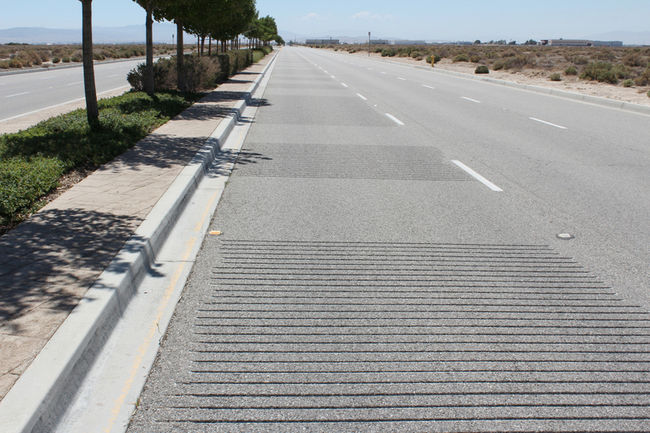
Musical roads are one of the most intriguing modern developments in transportation engineering. These specially designed road surfaces transform vehicle motion into audible melodies by using carefully spaced grooves or ridges. What appears to be a playful innovation is actually a precise application of acoustical physics, pavement engineering and human perception.
A musical road is a stretch of pavement engineered to generate musical tones when a vehicle drives over it at a specific speed. The tires interact with patterned grooves that create periodic vibrations. These vibrations propagate through the vehicle and are heard as sound inside the cabin.
Musical roads serve multiple purposes:
- Speed regulation and traffic calming
- Driver alertness and fatigue prevention
- Tourism attraction and city branding
- Demonstration of innovative infrastructure design
They are not random novelty features. They are engineered systems built on measurable physical principles.
The core physics of musical roads
The functioning of a musical road depends on a simple but powerful equation:
Frequency equals vehicle speed divided by groove spacing
f = v / s
Where:
- f is frequency in hertz
- v is vehicle speed in meters per second
- s is groove spacing in meters
Each time a tire strikes a groove, it generates an impulse. When these impulses repeat at a steady rate, the ear perceives a musical pitch equal to that repetition frequency.
Practical frequency range
Human hearing spans 20 to 20,000 Hz, but effective musical road design typically uses:
100 to 800 Hz
This range produces tones that transmit well through vehicle structures and are clearly audible.
Higher frequencies require extremely small groove spacing, which becomes difficult to manufacture and maintain.
Full engineering process to convert a tune into a road
Turning a melody into a drivable surface requires a structured workflow. The process translates musical information into physical geometry.
Step 1: Choose design speed
The melody will sound correct only near a selected target speed.
Example:
Design speed = 80 km per hour
Convert to meters per second:
80 × 1000 / 3600 = 22.22 m/s
Step 2: Select melody and note frequencies
Assume a melody:
C4 – D4 – E4 – G4
Standard frequencies:
C4 = 261.63 Hz
D4 = 293.66 Hz
E4 = 329.63 Hz
G4 = 392.00 Hz
Step 3: Calculate groove spacing
Use:
s = v / f
With v = 22.22 m/s
C4 spacing: 22.22 / 261.63 = 0.085 m (85 mm)
D4 spacing: 22.22 / 293.66 = 0.076 m (76 mm)
E4 spacing: 22.22 / 329.63 = 0.067 m (67 mm)
G4 spacing: 22.22 / 392.00 = 0.057 m (57 mm)
These values fall within practical milling tolerances.
Step 4: Convert rhythm into road length
Assume tempo = 120 beats per minute.
One beat duration:
60 / 120 = 0.5 seconds
Distance traveled per beat:
22.22 × 0.5 = 11.11 meters
If each note lasts one beat, total melody length:
4 × 11.11 = 44.44 meters
Groove count per note:
C4: 11.11 / 0.085 ≈ 131 grooves
D4: 11.11 / 0.076 ≈ 146 grooves
E4: 11.11 / 0.067 ≈ 166 grooves
G4: 11.11 / 0.057 ≈ 195 grooves
Step 5: Define groove geometry
Typical specifications:
- Depth: 6 to 10 mm
- Width: 10 to 15 mm
- Placement: wheel track zone
- Orientation: perpendicular to travel
Depth controls volume. Excessive depth increases noise and wear.
Step 6: Produce construction drawings
Engineers generate high precision CAD layouts that specify:
- Groove coordinates
- Spacing tolerances within ±1 mm
- Transition zones between notes
These coordinates guide CNC milling equipment.
Step 7: Field testing and calibration
Test vehicles equipped with microphones and accelerometers verify pitch and loudness. Engineers adjust groove profiles if needed.
Musical Road Video Showcase
Engineering demonstrations of acoustic roadway systems
Construction methods
Precision asphalt milling
Computer controlled milling machines cut grooves with high accuracy. This is the most widely used method.
Modular surface inserts
Removable rubber or composite strips allow temporary pilot installations.
Formed concrete grooves
Patterns are cast into fresh concrete for long term durability.
Cost structure and budgeting
Costs depend on site conditions and project scale.
Typical components:
- Engineering design: 10,000 to 50,000 USD
- Traffic control: 20,000 to 200,000 USD
- Precision milling: 5 to 20 USD per square meter
- Signage and outreach: 5,000 to 25,000 USD
- Annual maintenance: 5 to 10 percent of capital cost
Large urban projects may exceed these ranges.
Benefits of musical roads
Safety improvement
They function similarly to rumble strips, which are proven to reduce lane departure crashes.
Driver alertness
Auditory feedback reduces monotony and may prevent fatigue.
Tourism and branding
Installations often become attractions and generate media attention.
Limitations and challenges
Environmental noise
Repeated sound can disturb nearby residents.
Surface wear
Grooves degrade and require restoration.
Vehicle variability
Different vehicles reproduce tones differently.
Behavioral risk
Novelty may distract drivers if poorly managed.
Global adoption with real lengths
Japan
Japan hosts more than 30 melody roads. Individual segments typically range from 175 to 320 meters. Cumulative installed length exceeds several kilometers.
United Arab Emirates, Fujairah
A mountain highway installation measures approximately 1 kilometer and plays a classical melody.
India, Mumbai
The coastal road installation spans 500 meters and represents the country's first major musical road.
Hungary
Two documented installations measure 513 meters and 550 meters.
Spain
A pilot safety strip near Parla measures approximately 158 meters.
United States, New Mexico
The Route 66 musical segment is a short tourist installation estimated between 100 and 300 meters.
Argentina
A musical section on National Route 237 functions as a safety and tourism feature.
Indonesia
A toll road segment uses musical grooves to combat driver fatigue.
Netherlands
An experimental singing road was installed and later removed due to community noise concerns.
Monitoring and performance evaluation
After installation, agencies track:
- Speed compliance data
- Crash statistics over several years
- Noise measurements
- Maintenance cycles
- Public feedback
Quantitative evaluation determines long term value.
Future potential of musical road technology
Advances in digital surveying, CNC milling and acoustic modeling are making musical roads more precise and cost effective. Integration with smart infrastructure systems could allow adaptive patterns or multi functional safety features.
As cities seek innovative ways to improve safety and create memorable public spaces, musical roads offer a compelling example of science driven design in everyday infrastructure.
Conclusion
Musical roads are a practical application of acoustical physics translated into pavement engineering. By converting melodies into geometric spacing and precise groove patterns, engineers can create roadways that produce sound at controlled speeds.
The full process requires mathematical calculation, disciplined construction and careful evaluation. When implemented responsibly, musical roads enhance safety, engage drivers and contribute to civic identity.
They demonstrate how rigorous engineering can transform a simple stretch of asphalt into an interactive, functional and memorable piece of infrastructure.