
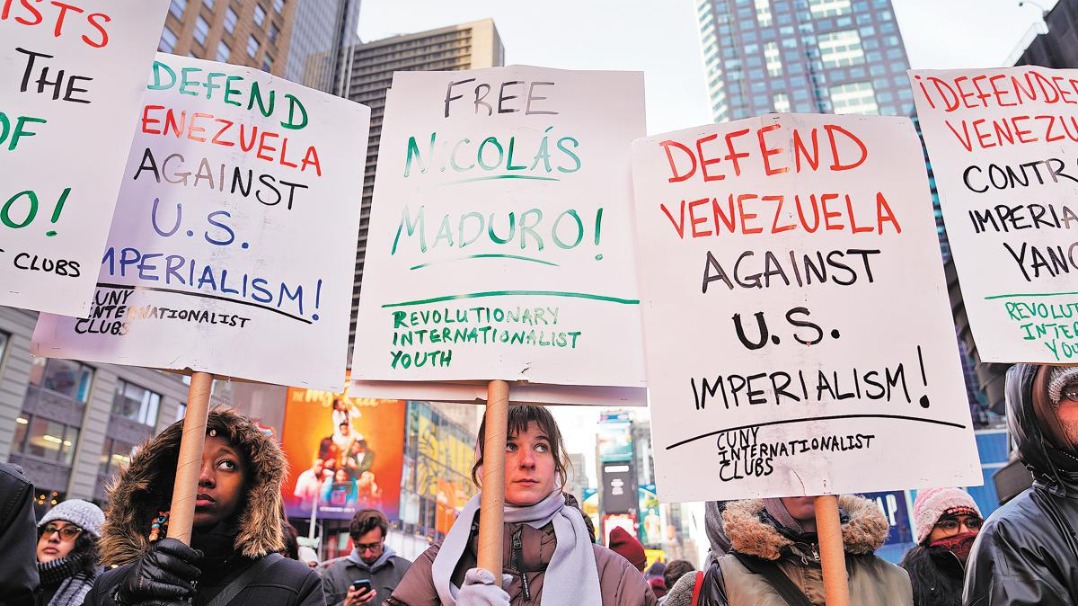
Overview: Why the Venezuela Crisis Is a Top Global Political Story in 2026
The Venezuela crisis has rapidly become one of the most searched and discussed global political events of 2026. Following a United States operation that resulted in the arrest and transfer of Venezuelan President Nicolás Maduro from Venezuelan territory to US custody, the international community has entered a period of heightened legal, diplomatic, and geopolitical tension. This development carries major implications for international law, state sovereignty, the United Nations Charter, global governance, Latin American stability, and international markets. It also raises critical questions about the legality of extraterritorial enforcement actions by major powers and sets the stage for a defining moment in global legal norms.
Venezuela Political Crisis: A Decade of Instability by the Numbers
Venezuela's political crisis did not emerge suddenly in 2026. It reflects more than ten years of institutional degradation, contested elections, international sanctions, and erosion of democratic legitimacy. Venezuela has experienced four disputed national elections since 2013, with over 300 political prisoners documented by international human rights organizations. International sanctions imposed by the United States Department of State, European Union, and allied nations have targeted over 900 individuals and entities in efforts to pressure the Maduro government. This long-term political instability laid the foundation for the current international confrontation and created the conditions for the dramatic January 2026 operation.
Venezuela Economic Collapse: Key Statistics and Trends
According to the World Bank, International Monetary Fund, and regional economic data, Venezuela's economy contracted by approximately 75 percent between 2013 and 2021. Hyperinflation peaked above 130,000 percent annually, destroying savings and destabilizing currency. Oil production, historically the backbone of Venezuela's economy, declined from 3.2 million barrels per day in 2000 to under 800,000 barrels per day in 2025. Gross domestic product per capita remains below USD 3,500, positioning Venezuela among the lowest in Latin America. More than 80 percent of Venezuelans now live below the poverty line. Despite limited stabilization in recent years, Venezuela remains economically fragile and highly exposed to political shocks that could trigger further economic deterioration.
Venezuela Migration Crisis: One of the Largest in Global History
The humanitarian dimension is central to understanding the Venezuela crisis. According to the United Nations High Commissioner for Refugees (UNHCR) and regional coordination platforms, 7.8 to 8.0 million Venezuelans have fled the country, representing over 25 percent of the national population. Major host countries include Colombia, Peru, Chile, Brazil, Ecuador, and the United States. The 2025 regional humanitarian response plan was funded at less than 45 percent of required levels, leaving migration management severely underfunded. Any escalation in political instability risks triggering additional migration flows, placing extreme pressure on neighboring states and destabilizing the entire region.
The January 2026 Operation: What Happened and Why It Matters
In early January 2026, US forces conducted an operation inside Venezuelan territory that resulted in the arrest of President Nicolás Maduro and his transfer to the United States. The U.S. Department of Justice described the operation as a law enforcement action connected to long-standing criminal indictments related to narcotics trafficking and organized crime. International reaction was immediate and intense, with many governments and legal experts describing the event as a violation of Venezuelan sovereignty, a breach of the UN Charter, and a destabilizing precedent in international relations. The operation has triggered unprecedented debate about the limits of state power and the future of international law.
International Law Analysis: UN Charter and Use of Force
Under Article 2(4) of the United Nations Charter, states are prohibited from using force against the territorial integrity or political independence of another state. Legal exceptions are strictly limited to explicit UN Security Council authorization, self-defense following an armed attack under Article 51, or consent of the territorial state. No public evidence indicates that any of these conditions were met in the Venezuela operation. International legal scholarship is clear on a fundamental principle: forcible extraterritorial abductions are generally unlawful under customary international law. Key principles involved include state sovereignty, non-intervention, prohibition of coercive enforcement actions across borders, and due process guarantees under international human rights law. While states may claim extraterritorial criminal jurisdiction, the method used to obtain custody is legally decisive.
Head of State Immunity: A Central Legal Battle
Under customary international law, sitting heads of state enjoy immunity from foreign criminal jurisdiction for official acts. Exceptions are narrowly defined and typically involve international crimes such as genocide or crimes against humanity. Drug trafficking charges occupy a legally contested space and are expected to be the subject of extensive litigation in US courts and international forums including the International Court of Justice. Defense teams are expected to challenge the legality of the arrest, admissibility of evidence, and alleged violations of due process and international law. Judicial outcomes from these proceedings could influence future cases involving extraterritorial enforcement actions globally and help clarify international legal norms around executive immunity.
United Nations Response and Global Diplomatic Fallout
Emergency Security Council discussions were convened following the operation. The UN Secretary-General warned of risks to international peace and security, calling for restraint and respect for international law. Security Council divisions reflect deep geopolitical polarization. China and Russia issued strong condemnations of the operation, framing the event as illegal and destabilizing. The European Union offered mixed responses emphasizing rule of law and accountability while expressing concern over precedent-setting implications. Latin American nations displayed regionally divided reactions, with public protests reported in multiple capitals and heightened concern over migration and regional stability. These reactions are contributing directly to evolving customary international law and shaping the future trajectory of international norms.
Economic and Market Impact Analysis
The Venezuela operation carries significant economic consequences. Increased risk of expanded sanctions regimes—potentially coordinated through the U.S. Office of Foreign Assets Control (OFAC)—threatens to further isolate the Venezuelan economy and freeze additional assets held abroad. Greater uncertainty surrounds frozen Venezuelan assets held by international financial institutions, and legal disputes over sovereign asset control are emerging. Regional economic spillovers are substantial, with rising fiscal pressure on host countries managing massive Venezuelan migration flows. Elevated investor risk premiums in Latin America reflect heightened uncertainty across the region. Ongoing volatility in global energy markets continues as markets assess potential supply disruptions and geopolitical risks.
Global Precedent Risk: Why This Case Matters Beyond Venezuela
This event raises fundamental global questions that extend far beyond Venezuela. Can powerful states unilaterally enforce domestic criminal law across borders? Does the UN Charter still effectively constrain state behavior in the 21st century? Will international law fragment into power-based interpretations, or will multilateral norms prevail? If left unchallenged, this case risks normalizing unilateral extraterritorial operations and eroding the foundational principles that have governed interstate relations since 1945. The precedent could embolden other powerful states to pursue similar actions, creating a cascade of legal and diplomatic crises.
Future Scenarios and Risk Outlook
Three primary scenarios are likely to unfold in coming months. In a judicial resolution scenario, extended litigation in US federal courts will occur with potential filings before the International Court of Justice clarifying legal norms over time. A diplomatic escalation scenario could involve reciprocal sanctions, diplomatic expulsions, and increased geopolitical polarization between major powers. A regional destabilization scenario risks creating a political vacuum in Venezuela, civil unrest, and additional migration surges exceeding 1 million people, further destabilizing Latin America and straining the international humanitarian system coordinated through UN OCHA (Office for the Coordination of Humanitarian Affairs).
Policy Recommendations for Governments and Institutions
Governments and international institutions should immediately increase humanitarian funding to support migration management in neighboring countries through the UNHCR and International Organization for Migration (IOM). Independent international fact-finding mechanisms should be supported to establish a credible record of events and legal violations. Diplomatic engagement and de-escalation should be prioritized over additional enforcement actions through UN Security Council channels. All nations should publicly reaffirm UN Charter principles to reinforce the legal framework governing interstate relations. Judicial independence and due process standards must be protected to ensure fair legal proceedings and maintain the integrity of international legal institutions.
Conclusion: Venezuela Crisis as a Defining Moment for International Law
The Venezuela crisis represents a critical test for international law, global governance, and geopolitical stability. The arrest of a sitting head of state without multilateral authorization challenges foundational principles of sovereignty and non-intervention that have guided the international system for eight decades under the UN Charter. The global response will shape future norms governing the use of force, international criminal enforcement, and the credibility of the UN system. This is not only a Venezuela story. It is a defining global political moment in 2026 with implications that will reverberate through international relations for years to come.
Official Government and International Sources
- United Nations Charter - Full Text
- UN Security Council - Official Statements
- U.S. Department of State - Official Position
- International Court of Justice - Legal Framework
- UNHCR - Venezuela Humanitarian Response
- International Monetary Fund - Economic Data
- World Bank - Development Indicators
- European Union - Official Statements