
Introduction
Low code and no code platforms are transforming how small and medium businesses design, deploy, and scale software. What began as niche productivity tooling has matured into a core infrastructure layer for digital operations. SMBs face constant pressure to innovate with limited engineering resources, and these platforms offer a measurable path to faster development, lower costs, and improved operational efficiency.
The global low code development platform market is estimated at approximately USD 10.5 billion in 2024, with projected compound annual growth near 23 percent over the coming decade. Conservative forecasts place the market above USD 80 billion by 2034. This growth reflects a structural shift in how organizations approach software creation, particularly in resource constrained environments.
This article presents a detailed analysis of low code and no code platforms for SMBs, covering definitions, market trends, ROI models, architecture, security, governance, and practical implementation strategies.
What Are Low Code and No Code Platforms
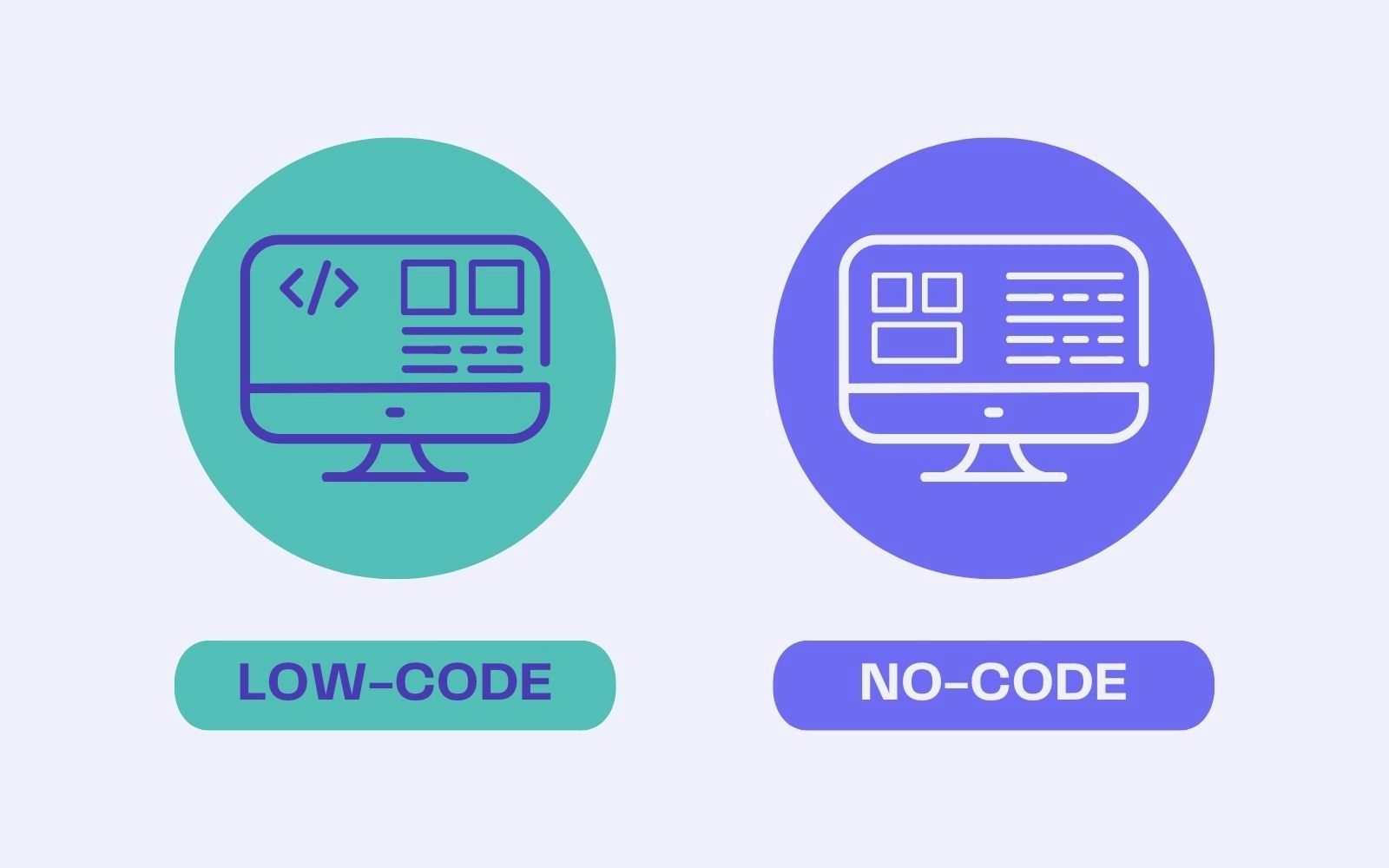
Definition of No Code Platforms
No code platforms allow users to build applications using visual interfaces without traditional programming. Business users assemble workflows, forms, and dashboards through drag and drop components.
Key characteristics include:
- Median time to first application measured in hours to days
- Target users are non technical staff and citizen developers
- Suitable for internal tools, customer forms, and lightweight portals
- Minimal requirement for coding expertise
Definition of Low Code Platforms
Low code platforms combine visual modeling with programmable extension points. Developers can inject custom code and integrate advanced APIs.
Core attributes include:
- Median time to first application measured in days to weeks
- Designed for collaboration between developers and business teams
- Supports complex integrations and enterprise workflows
- Offers SDKs and extensibility frameworks
Hybrid Development Models
Some organizations adopt hybrid stacks that merge traditional engineering with low code acceleration. This model preserves architectural control while increasing productivity.
Low Code Market Growth and Industry Trends
Global Market Size and Forecast
Recent market research indicates:
- Low code market value around USD 10.5 billion in 2024
- Projected CAGR near 23 percent through the next decade
- Expected valuation exceeding USD 80 billion by 2034
- Expanded ecosystem including no code and automation tools may exceed these figures
Drivers of Adoption in SMBs
Several forces accelerate adoption:
- Persistent shortage of professional developers
- Rising outsourcing costs
- Demand for rapid digital transformation
- Increased competition in SMB markets
SMBs typically allocate 1 to 3 percent of annual revenue to IT. Redirecting 10 to 25 percent of that budget toward low code platforms can reduce project timelines by 30 to 70 percent for common initiatives.
Benefits of Low Code and No Code for SMBs
Faster Time to Market
Traditional development cycles for SMB applications often span 8 to 12 weeks. Low code alternatives frequently deliver results in 2 to 6 weeks, representing a reduction of 50 to 80 percent.
Developer Productivity Gains
One developer using a mature low code platform can support 3 to 10 times more applications through reuse and automation.
Cost Reduction
Average labor cost reductions range between 20 and 60 percent when comparing outsourced development to internal low code builds.
Operational Agility
Organizations experience faster iteration cycles, typically reaching functional MVPs in 2 to 4 iterations instead of 6 to 10.
ROI Case Studies for SMB Low Code Adoption
Case Study 1: CRM Intake Automation
Baseline scenario:
- Outsourced development cost of USD 8,000
- Delivery time of 6 weeks
- Annual maintenance of USD 1,500
Low code alternative:
- Platform subscription and labor totaling USD 3,100
- Deployment within days
- First year savings of USD 4,900, or 61 percent
Case Study 2: Inventory Dashboard Integration
Traditional approach:
- Development cost of USD 35,000
- Delivery time of 12 weeks
Low code approach:
- Total cost of USD 15,500
- Delivery in 4 to 6 weeks
- Savings of USD 19,500, or 56 percent
Case Study 3: Workflow Automation
Manual operations:
- Annual labor cost of USD 26,000
- Error related costs of USD 5,000
No code automation:
- Annual platform cost of USD 3,600
- Setup cost of USD 2,000
- Recurring savings of USD 22,400, or 86 percent
Architecture Best Practices for Low Code SMB Systems
Integration Strategy
Recommended guidelines:
- Begin with 1 to 3 core connectors
- Each additional connector adds 15 to 30 percent overhead
- Prioritize stable API ecosystems
API First Design
Critical workflows should include:
- OAuth based authentication
- Automated retry logic
- Idempotent transaction handling
- Coverage for 80 to 90 percent of mission critical processes
Data Management
Best practices include:
- Limit transient caches to 48 hours
- Store aggregated summaries instead of raw data
- Reduce compliance exposure
Observability Requirements
Production systems should maintain:
- Structured logging
- Performance metrics
- 30 to 90 day retention windows
Security Risks and Compliance in Low Code Platforms
AI Generated Code Risks
Research indicates that up to 45 percent of sampled AI generated code contains security vulnerabilities. All generated logic should undergo automated scanning and review.
Access Control Policies
Security recommendations:
- Restrict administrative privileges to less than 10 percent of users
- Enforce least privilege access
- Use encrypted credential vaults
Compliance Standards
Organizations handling sensitive data should require:
- SOC 2 Type II certification
- ISO 27001 compliance
- Encryption at rest and in transit
- Audit capable key management
Change Management
Deployment pipelines should ensure:
- Sandbox to staging to production promotion
- Automated smoke testing
- At least 80 percent automated test coverage
Governance Framework for SMB Low Code Adoption
A structured governance model includes:
- Formal platform policy within 30 days
- Complete inventory of business critical applications
- Training programs of 4 to 6 hours for citizen developers
- Vendor uptime guarantees around 99.5 percent
- Weekly security scans
- Export capability for 95 percent of data and logic
Staffing Model for Low Code Operations
Recommended staffing ratios:
- 0.2 to 0.5 full time equivalent per 50 active users
- 5 to 10 percent of business users trained as builders
- 0.5 to 1 full time equivalent per 20 production apps
Generative AI and the Future of Low Code Development
AI integration is expected to:
- Reduce manual configuration time by 20 to 50 percent
- Automate interface generation
- Improve testing workflows
Security oversight remains essential due to previously noted vulnerability rates.
Implementation Roadmap for SMBs
Phase 1: Planning
- Establish governance policies
- Shortlist three vendors
- Assign platform ownership
Phase 2: Pilot Projects
- Deploy 2 to 3 pilot applications within 6 weeks
- Measure adoption and performance metrics
Phase 3: Evaluation
- Target 10 percent monthly growth in active users
- Maintain mean time to change under 48 hours
Phase 4: Scaling
- Expand to additional teams
- Aim for ROI breakeven within 6 to 12 months
Frequently Asked Questions About Low Code and No Code
How fast can SMBs deploy apps using no code platforms?
No code applications typically reach MVP status in hours to days, while low code projects complete in days to weeks. Traditional development often requires weeks to months.
How much can SMBs save with low code development?
Most organizations report cost reductions between 20 and 60 percent, depending on complexity and labor rates.
Are low code platforms secure for customer data?
Yes, when combined with strong governance, encryption, and automated security scanning. AI generated code requires additional review due to vulnerability risks.
Will low code replace software developers?
Low code increases developer productivity rather than replacing engineering expertise. It shifts focus toward architecture, integration, and governance.
Future Outlook for Low Code in SMB Environments
Three potential trajectories define the coming decade:
- Baseline growth near 22 to 26 percent CAGR with adoption for 30 to 50 percent of tactical SMB apps
- Accelerated growth above 30 percent driven by mature AI integration
- Moderated adoption in regulated sectors with stronger compliance requirements
Conclusion
Low code and no code platforms represent a measurable competitive advantage for SMBs. Empirical data demonstrates:
- Time to market reductions of 30 to 70 percent
- Cost savings between 20 and 60 percent
- Significant operational efficiency improvements
When implemented with disciplined architecture, governance, and security practices, these platforms enable small organizations to deliver sophisticated digital capabilities at a fraction of historical cost. The primary challenge is not whether to adopt low code, but how to integrate it strategically into long term business operations.