
Introduction
Semiconductors are no longer components. They are economic leverage, sovereign capability, industrial productivity and digital dominance embedded in silicon. Every artificial intelligence model, every data center cluster, every electric vehicle platform and every secure communications system runs on advanced semiconductor architecture. The scale of this industry has crossed into strategic infrastructure territory.
Global semiconductor revenue reached USD 791.7 billion, according to Semiconductor Industry Association data. Industry forecasts from World Semiconductor Trade Statistics indicate the market is advancing toward approximately USD 975 billion, placing the industry on the threshold of a trillion dollar annual market. The growth is not cyclical noise. It is structural, driven by compute intensity, memory bandwidth demand, electrification and sovereign digital investment.
This executive briefing presents a data grounded view of:
- Global semiconductor market size and growth
- Installed wafer fabrication capacity
- Advanced node concentration
- Memory industry scale
- Top semiconductor producing countries
- Top 15 semiconductor companies by revenue and technological impact
- Long term structural demand outlook
- Capital intensity and supply concentration realities
Global Semiconductor Market Size and Revenue Expansion
The semiconductor industry has compounded steadily over the past decade with acceleration in high performance compute and memory segments.
Key confirmed figures:
- Global semiconductor sales: USD 791.7 billion
- Annual growth rate: 25.6 percent year over year
- Market projection approaching: USD 975 billion
- Long term structural growth supported by AI and data center expansion
The growth composition is shifting. Logic devices tied to AI accelerators and high performance CPUs represent an increasing revenue share. Memory revenue rebounded strongly due to high bandwidth memory demand and improved average selling prices.
High growth segments include:
- AI training processors
- AI inference accelerators
- Data center GPUs
- High bandwidth memory
- Automotive microcontrollers
- Power semiconductors for electric vehicles
- Industrial automation chips
The semiconductor content per AI server rack has increased materially due to GPU density and stacked memory requirements. Data center silicon spending per rack is multiple times higher than prior compute generations.
Global Wafer Fabrication Capacity
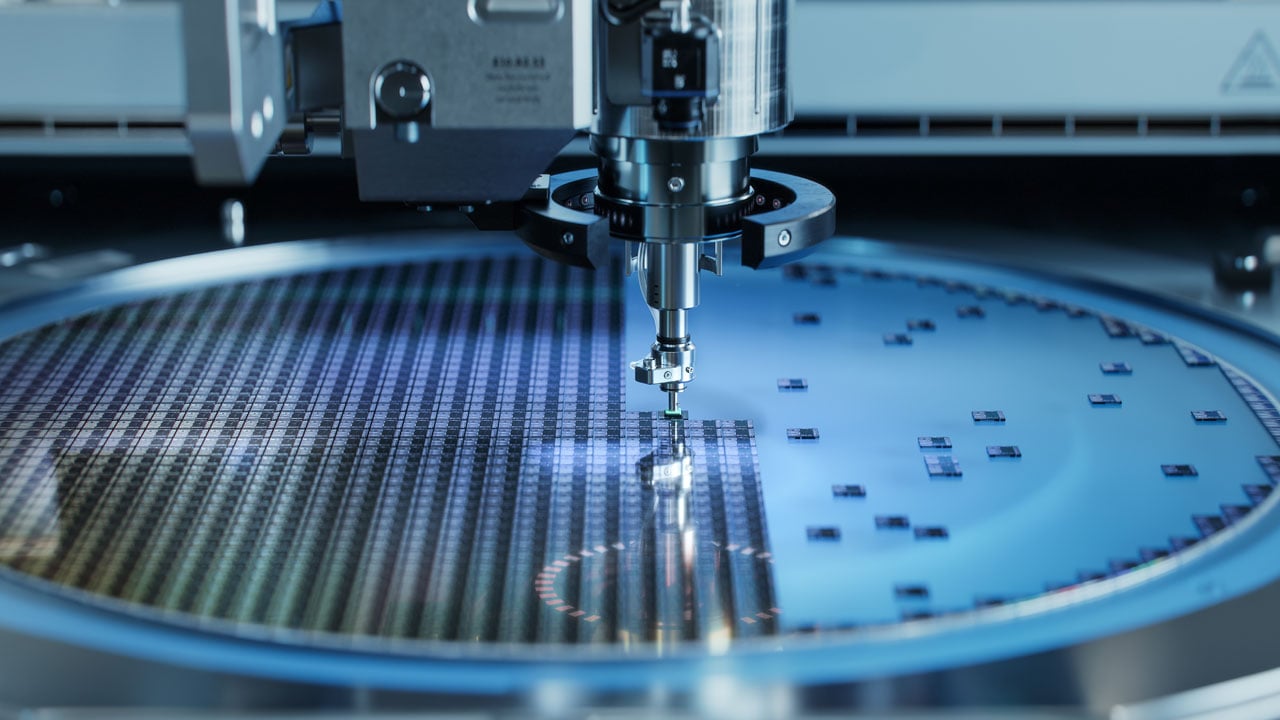
Wafer capacity defines actual output capability. SEMI reports global installed wafer fabrication capacity at approximately 33.7 million wafers per month, standardized to 8 inch equivalent.
This includes:
- Advanced logic fabrication
- DRAM memory fabrication
- NAND memory fabrication
- Analog and mixed signal
- Discrete and power devices
- Specialty and mature node production
12 inch wafer fabs account for the majority of high value logic and memory output. Leading foundries report annual 12 inch equivalent capacity in the tens of millions of wafers.
For example:
- TSMC annual capacity exceeds 17 million 12 inch equivalent wafers
- SMIC announced additional 40,000 12 inch wafer starts per month in expansion plans
The wafer start metric is critical because advanced node allocation determines AI processor output, GPU supply and hyperscale deployment speed.
Advanced Node Technology Leadership
The semiconductor frontier is defined by node scaling and packaging innovation.
Leading edge logic nodes:
- 7 nanometer
- 5 nanometer
- 4 nanometer
- 3 nanometer
- Emerging 2 nanometer
Sub 7 nanometer manufacturing requires extreme ultraviolet lithography. Access to EUV tools determines which companies can produce advanced AI processors and server CPUs.
Advanced transistor architectures include:
- FinFET
- Gate All Around
- RibbonFET
- Backside power delivery
Memory density scaling includes:
- 1 alpha DRAM
- 1 beta DRAM
- 176 layer NAND
- 232 layer NAND
Advanced packaging technologies:
- 2.5D integration
- 3D stacked memory
- Through silicon via
- Chiplet integration
- High bandwidth memory stacks
Packaging has become a strategic bottleneck. AI accelerators require integrated memory stacks and high density interconnect packaging.
Top Semiconductor Producing Countries by Capacity and Strategic Influence
The global semiconductor supply chain is geographically concentrated. The following countries represent the most significant contributors to fabrication, memory production and packaging scale.
China Semiconductor Manufacturing Scale
China holds the largest aggregate wafer capacity when measured by total wafer starts per month.
Key attributes:
- High volume mature node production
- Rapid 12 inch fab construction
- Strong domestic electronics demand
- Large scale analog and power semiconductor output
China dominates production of mature node microcontrollers and industrial chips essential for automotive and consumer electronics.
Taiwan Advanced Logic Leadership
Taiwan is the global leader in advanced logic wafer production.
TSMC dominates sub 7 nanometer production and manufactures the majority of advanced AI processors.
Key data:
- Annual capacity exceeds 17 million 12 inch equivalent wafers
- Leading share of sub 5 nanometer production
- Primary fabrication partner for global AI chip designers
Taiwan concentration represents both operational excellence and geopolitical sensitivity.
South Korea Memory and Advanced Node Strength
South Korea houses Samsung Electronics and SK Hynix.
Combined memory market share:
- DRAM market share above 70 percent combined
- Major global NAND production
- Leadership in high bandwidth memory
Memory wafer capacity in South Korea supports AI infrastructure deployment at global scale.
United States Semiconductor Ecosystem
The United States leads in semiconductor design and is expanding domestic manufacturing.
Major players:
- Intel
- Micron
- GlobalFoundries
- Leading fabless companies
Intel revenue approximately USD 48 billion. Micron revenue approximately USD 41 billion.
The United States remains the epicenter of AI chip architecture and high performance compute design.
Japan Materials and Specialty Leadership
Japan supplies critical materials including:
- Photoresist
- Silicon wafers
- Specialty chemicals
- Automotive microcontrollers
Japan's upstream supply role is indispensable for advanced fabrication.
Regional Contributors
- Germany: Automotive Semiconductor Base
- Singapore: Advanced Packaging Hub
- Netherlands: Lithography Equipment Center
- Malaysia: OSAT Manufacturing
- Israel: Secure Chip Design
- France: Power Electronics
- Italy: Industrial Semiconductor Production
- Vietnam: Emerging Assembly
- India: Semiconductor Expansion Programs
- United Kingdom: Design and Research Hub
Each country contributes either fabrication, materials, packaging or IP capabilities critical to global semiconductor resilience.
Top 15 Semiconductor Companies by Revenue and Technological Influence
The following corporations determine global wafer allocation, memory output and AI compute capacity.
1. NVIDIA Corporation AI Chip Revenue Leader
Revenue exceeded USD 100 billion.
NVIDIA drives global advanced node wafer demand due to AI accelerators.
GPU platforms require:
- Sub 5 nanometer wafers
- Advanced packaging
- High bandwidth memory integration
NVIDIA revenue growth has reshaped foundry allocation priorities.
2. Samsung Electronics Semiconductor Division
Samsung Electronics semiconductor revenue approximately USD 72 billion.
Samsung strengths:
- DRAM leadership
- NAND production
- 3 nanometer logic fabrication
Samsung is vertically integrated across memory and logic.
3. SK Hynix Memory Scale
SK Hynix revenue approximately USD 60 billion.
Key leadership:
- High bandwidth memory
- DRAM density scaling
- AI memory integration
HBM demand has materially increased memory margins.
4. Intel Corporation Manufacturing and Architecture
Intel Corporation revenue approximately USD 48 billion.
Technology focus:
- RibbonFET transistor
- Backside power architecture
- Advanced domestic fabrication
Intel is investing heavily in next generation node competitiveness.
5. Micron Technology Memory Expansion
Micron Technology revenue approximately USD 41 billion.
Micron increasing:
- DRAM wafer starts
- NAND production
- HBM output
Memory cycles remain volatile but structurally supported by AI workloads.
6-15. Additional Major Semiconductor Companies
- Qualcomm - Edge and Mobile Compute
- Broadcom - Infrastructure Silicon
- Taiwan Semiconductor Manufacturing Company - Advanced Foundry
- United Microelectronics - Mature Node
- Semiconductor Manufacturing International Corporation - Domestic Expansion
- GlobalFoundries - Specialty Processes
- Infineon - Silicon Carbide
- STMicroelectronics - Automotive Electronics
- NXP - Automotive Microcontrollers
- Tower Semiconductor - Analog and RF
These firms collectively control advanced wafer supply, memory output, power electronics scaling and automotive semiconductor capacity.
Capital Intensity and Time to Production
Advanced semiconductor fabrication is among the most capital intensive industrial activities globally.
Key characteristics:
- Leading edge fab cost often exceeds USD 15 billion
- Multi year construction and tool installation cycles
- Yield ramp timelines measured in years
- Highly specialized workforce requirements
- Energy intensive operations
From groundbreaking to high yield mass production at advanced nodes often requires four to seven years.
Strategic Risk and Supply Concentration
Major risk factors:
- Geographic concentration of sub 5 nanometer production
- EUV lithography tool access constraints
- Advanced packaging bottlenecks
- Energy supply reliability
- Skilled engineering workforce shortages
Advanced node concentration in Taiwan and South Korea creates systemic exposure for global AI deployment.
Long Term Structural Semiconductor Demand
Future semiconductor demand is driven by:
- Artificial intelligence compute expansion
- Data center hyperscale buildout
- Electric vehicle semiconductor content growth
- Autonomous driving systems
- Industrial robotics
- 5G and next generation network infrastructure
- Defense modernization
- Secure edge computing
- Quantum computing research
Semiconductor content per electric vehicle continues to increase year over year.
AI clusters require large GPU counts, each paired with multiple high bandwidth memory stacks.
Cloud providers deploy thousands of accelerators per expansion cycle.
Executive Conclusion
The semiconductor industry is approaching a trillion dollar annual revenue threshold. Installed wafer capacity has reached record levels. Advanced node production is geographically concentrated. Memory production is dominated by a small number of firms. AI compute demand is redefining wafer allocation.
Semiconductors are no longer tactical components. They are strategic assets tied to economic power, industrial competitiveness and national capability.
For governments, investors and enterprise technology leaders, long term positioning in semiconductor capacity, advanced packaging, memory production and upstream tool supply will determine digital leadership for decades.