
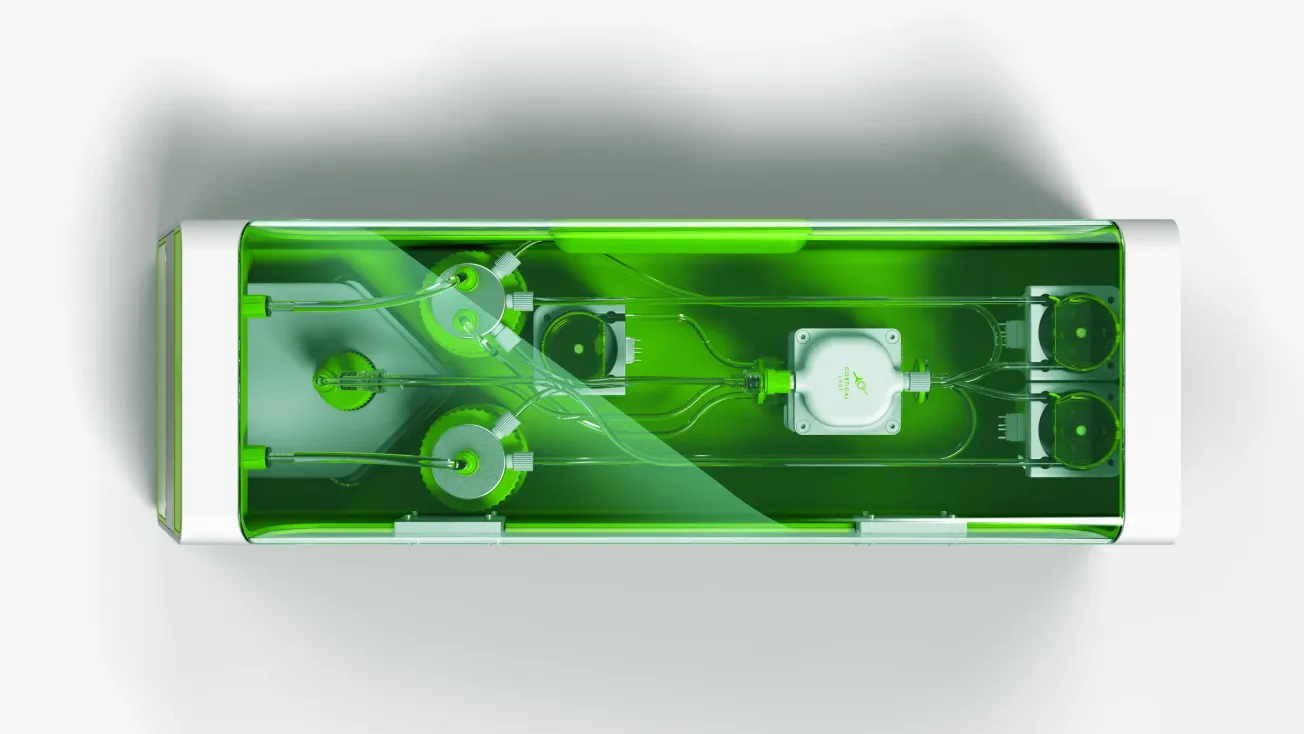
BIA (Bio-Integrated AI) computing – often called biocomputing or biological computing – refers to emerging technologies that fuse living biological systems (such as neural tissue or engineered cells) with electronic hardware to perform computation. Unlike conventional silicon-based computers, BIA computing platforms exploit the intrinsic information-processing capabilities of biology (for example, neural networks of cultured brain cells) to achieve tasks traditionally done by digital processors. This nascent field draws on advances in neuroscience, synthetic biology, and artificial intelligence to create hybrid computing systems. Researchers have demonstrated prototypes (e.g. lab-grown neuronal cultures that learn to play Pong) and commercial devices (e.g. Cortical Labs' CL1) that illustrate BIA computing's principles. A defining motivation is energy efficiency: human neurons can compute with orders-of-magnitude lower power than silicon chips.
In BIA computing, neural tissue or organoids (clusters of brain-like cells) are grown on microelectrode arrays to form living processors. These biological networks adapt in real time and exhibit learning-like behavior. For example, human brain organoids have been trained to play the video game Pong, demonstrating goal-directed activity in vitro. Such systems hold the promise of ultra-low-power computing: a human brain performs about 10^18 operations per second on only ~20 watts of power, whereas the world's top supercomputers need millions of watts for similar computation. By leveraging "wetware" instead of hardware, BIA computing aims to revolutionize AI infrastructure while addressing the soaring energy costs of data centers.
Historical Background and Origins
The concept of harnessing biology for computing is rooted in mid-20th century ideas. Alan Turing speculated about "machine intelligence" and the possibility of synthetic brains, and early neural network models (e.g. McCulloch-Pitts neurons, 1940s) abstracted brain function into computation. However, practical BIA computing is very recent, made possible by advances in stem-cell technology, neuroengineering, and AI. In the 2000s, "neuromorphic" chips (like IBM's TrueNorth) began mimicking brain-like architectures in silicon. In parallel, biologists cultivated neural cultures on chips, but only in the 2020s did these combine into biocomputing prototypes. The term "organoid intelligence" was coined in 2023 to describe using brain organoids for computation. Projects like U.S. NSF's Biocomputing through EnGINeering Organoid Intelligence (BEGIN OI) program (launched 2024) explicitly fund research in this area. The recent commercial milestones underscore this origin story: in 2022-2025, companies such as Cortical Labs (Melbourne) and FinalSpark (Switzerland) publicly demonstrated neuron-based computing devices.
Key milestones include:
- DishBrain experiment (2021): Researchers cultured 800,000 living neurons on a chip that learned to play Pong. This proof-of-concept showed neurons can form goal-oriented networks.
- CL1 Biological Computer (2025): Cortical Labs launched the CL1, the "first code-deployable biological computer" integrating human neural networks with silicon interfaces.
- FinalSpark Neuroplatform (2024): FinalSpark deployed a remote biocomputing lab with 16 human brain organoids, enabling global researchers to run experiments on living neural processors.
These developments have framed BIA computing as a real emerging field, distinct from traditional computing. In one review of Synthetic Biological Intelligence (SBI), experts outline how engineered neural cultures are now delivering early results and highlighting ethical and technical challenges. In sum, BIA computing's origins lie at the intersection of AI research, neuroscience, and synthetic biology, catalyzed by proof-of-principle demos over the last few years.
Technology and Architecture
BIA computing systems use live cells as processing units. The core architecture typically involves neural cultures or brain organoids interfaced with microelectrode arrays (MEAs) on a chip. Nutrient-rich environments (akin to incubators) keep the cells alive while electronics stimulate and record their activity. The Cortical Labs CL1 device exemplifies this approach: it contains chambers where human neurons grow across a silicon wafer, with embedded electrodes sending/receiving electrical impulses to and from the cells. Cortical Labs describes this as a "closed-loop high-performance system" where real neurons interact with software in real time.
Similarly, FinalSpark's Neuroplatform provides remote access to human brain organoids (mini-brains grown from stem cells) placed on MEAs. Researchers can upload code or stimuli, and the organoids process the inputs as learning units. This platform uses a custom Biological Intelligence Operating System (biOS) to simulate virtual environments, effectively "raising" the neural network in a digital world. The neurons' responses then influence that simulated world, creating a feedback loop.
A distinct approach is DNA or molecular computing, which encodes information in molecules. While not the same as neuron-based systems, it falls under biocomputing. For example, DNA strands can perform computation via chemical reactions. However, this article focuses on neural biological computing (SBI).
Key architectural points:
- Living Neural Network: The basic "processor" is a network of real neurons (or neuronal stem cells). These cells are self-organizing and plastic, meaning they adapt their connections over time. Unlike fixed silicon gates, these networks can rewire themselves through processes analogous to learning. As Cortical Labs notes, the human neuron is "self programming [and] infinitely flexible", reflecting four billion years of evolution.
- Electrode Interface: Electrodes printed on the chip surface both stimulate the neurons and record their spikes (action potentials). The spatial pattern of activity across the array represents computational states.
- Control Software: Because neural signals are analog and dynamic, specialized software (often AI-driven) interprets the signals and maps them to tasks. For instance, in DishBrain, the software translated paddle movements in Pong into electrical stimuli delivered to parts of the neural culture.
- Life Support Systems: These devices include built-in life support (fluidic systems) to nourish the cells, filter waste, and control temperature. Cortical's CL1 can sustain neurons for months continuously. This is a key difference from typical hardware.
In practice, researchers have grown brain organoids (spherical clusters of neurons) and interfaced them with chips. Each organoid contains millions of neurons that form functional networks. In FinalSpark's Neuroplatform, 16 such organoids act as a bank of "living processors," remotely accessible 24/7.
Overall, BIA computing architectures blur the line between biology and hardware. Instead of AND/OR gates, the building blocks are synapses; instead of clock cycles, computation unfolds through bioelectrical spikes. These hybrid systems currently operate very differently from classical PCs: they learn and adapt on their own, and communicate via neural code rather than binary logic. This raises both exciting possibilities and significant challenges (discussed below).
Benefits and Applications
BIA computing offers several potential benefits over traditional computing:
Extreme Energy Efficiency
Perhaps the most touted advantage is power consumption. A human brain (~10^11 neurons) uses only ~20 watts, whereas an exaflop-scale supercomputer needs tens of megawatts. Early estimates suggest neuron-based processors could perform certain tasks using orders-of-magnitude less energy. For example, Cortical Labs points out that human brain cells on chips can achieve similar computations with much lower heat and power. FinalSpark claims its bioprocessors consume "a million times less power than traditional digital processors". In an era of soaring AI energy costs, this efficiency is highly attractive.
On-Device Learning and Adaptation
Biological networks inherently learn from stimuli. Unlike conventional AI chips that require retraining, a network of living neurons can continue to adapt in real time. FinalSpark notes that a "neural network built from actual neurons adapts naturally, learns continuously and doesn't need retraining from scratch". This could lead to self-optimizing systems that improve during operation, rather than being static after fabrication.
Compactness and Density
In theory, neural tissue can pack enormous connectivity in a tiny volume. Four-dimensional integration of cells (e.g. 3D organoids with layers) might vastly surpass current chip densities. This could enable very high compute density per area.
Novel Computing Paradigms
BIA computing could excel at tasks that are hard for conventional computers. For example, tasks like pattern recognition, adaptive control, or simulation of biological systems might map naturally onto neural hardware. Early demos (like Pong) hint that goal-oriented tasks are possible. Some envision using biocomputers for complex simulations in neuroscience or drug discovery, where natural neural processes could capture aspects of biology more accurately.
Reduced Carbon Footprint
If neurons indeed replace some silicon in data centers, the overall carbon emissions could drop. If biocomputers are used for even a portion of AI workloads, the IT industry's power draw could substantially decrease. This eco-friendly angle is a strong motivator.
Applications are still largely experimental, but potential areas include:
- Specialized AI Acceleration: Hybrid bio-electronic servers could handle particular AI subroutines (e.g. adaptive learning) more efficiently than digital chips.
- Pharmaceutical Research: Organoid intelligence may help model drug effects. For instance, organoids already aid in simulating brain development and disease; interfacing them with computing platforms could create living testbeds for brain drug screening.
- Neuroscience and Psychology: These systems naturally serve as models for understanding cognition. Running game environments through neurons provides insight into learning processes.
- Cybersecurity and Novel Computing: Some predict entirely new architectures (e.g. "living neuromorphic networks") for tasks like encryption or pattern generation.
- Edge Computing Devices: In the far future, one could imagine implantable or remote bio-hardware for edge AI with minimal power needs (though such ideas are speculative).
Challenges and Ethical Considerations
BIA computing faces substantial technical and ethical challenges that may slow its progress:
Ethical and Consciousness Concerns
The most-discussed issue is consciousness or moral status. When a network of human neurons begins exhibiting adaptive behavior, questions arise: Is it alive? Sentient? Although current organoids lack sensory input and are far from a human brain, experts warn we must address these questions proactively. For instance, philosophically "can neurons in a dish suffer?" (a concern noted by ethicists). The field is already debating what terminology to use ("sentience" controversy in the Pong experiment) to avoid hype. Funding programs now require ethicists on research teams (e.g. NSF's 2024 program mandated a 50-50 split of science and ethics in proposals). Governing when and how to "switch off" a living processor remains unresolved.
Technical Complexity and Control
Bioprocessors are far more complex than transistors. We do not fully understand how neural networks encode information, making it hard to program them. Even FinalSpark's scientists admit "Nobody really knows how neurons encode information". Controlling these systems reliably is a hurdle. They require highly controlled environments: stable temperature, nutrient media, sterility, etc. Minor disturbances (pH changes, contamination) can kill or alter the network. In short, these systems need biotechnology lab protocols, not standard electronics handling.
Scalability and Reliability
Scaling from one biocomputer to thousands is nontrivial. Each device must maintain living tissue, with limited lifespan. Running thousands of organoid units would demand enormous maintenance infrastructure (parallel cell cultures, sterility, etc.). There is also batch variability: two neural cultures can differ unpredictably. This poses challenges for consistency and reproducibility.
Security and Bio-Risks
Traditional cybersecurity assumes code vulnerability, but living hardware introduces biosecurity risks. For example, viruses or bacteria could infect the neurons. A digital surge or power failure might "kill" the cells. Addressing such risks requires sterile containment (Biosafety Level labs) and novel safeguards. This intersection of IT and biotechnology creates a new "attack surface" of biological hazards.
High Costs and Infrastructure
Early biocomputers are expensive to develop and operate. The CL1 sells for about $35,000 per unit, reflecting specialized hardware and life-support systems. Only research institutions or well-funded companies can afford them initially. While proponents argue energy savings will offset costs, the upfront R&D and manufacturing expenses are high.
Regulatory Uncertainty
There is no established regulatory framework for biological computation. It straddles categories (medical device? computer hardware? biotech?), creating uncertainty about standards, intellectual property, and liability.
Despite these challenges, the field is proceeding with caution. Developers engage ethicists and adopt transparency measures (for example, Cortical Labs involved ethicists in designing their Pong experiment and sought community input on terminology). Global workshops (e.g. Asilomar meetings) are being held to discuss limits and safeguards. In summary, the cons of BIA computing include complex ethics (possible consciousness), engineering difficulties (control, scaling), biosafety, and high initial costs. These concerns will need to be carefully managed as the technology matures.
Market Size, Industry Trends, and Regional Outlook
BIA computing is part of a broader next-generation computing market that includes quantum, neuromorphic, and bio-inspired systems. According to market research, the global next-generation computing sector is projected to reach about $188.5 billion by 2030, with North America dominating at roughly half of that. Within this, bio- and brain-computing are high-growth niches. A recent analysis estimated the global biocomputing market at around $9.4 billion in 2024, with forecasts of explosive growth (potentially 10–15× by 2035 or beyond).
Key market insights:
- Energy and Environmental Drivers: Rising energy costs and data center emissions are major drivers. Investors see biocomputing as a way to achieve greener AI. "Demand for energy-efficient computing" and "investments in AI" are fueling biocomputing.
- AI and Genomics Synergy: Growth is fueled by convergence of AI, biology, and finance. The computational biology market (a close cousin) is expected to grow from $7.2B in 2025 to $22B by 2034 (≈13% CAGR). This indicates strong demand for AI-driven bio-research tools, which overlaps with biocomputing needs.
- Commercialization Pace: BIA computing is still early stage. Only a few startups and research consortia exist. As devices like FinalSpark's Neuroplatform (2024) and CL1 (2025) reach market, commercial adoption will accelerate.
Regional perspectives:
- North America: Leading in R&D and funding. The U.S. holds about 49% of the computational biology market, reflecting strong biotech and AI sectors. Government agencies (NIH, NSF, DARPA) heavily back bio-AI initiatives. North American tech companies are also exploring brain-inspired chips (though mostly silicon-based so far).
- Asia-Pacific: Fastest growth region. China and India are investing in genomics and AI. China is expected to dominate Asia Pacific due to large investments in health tech and AI drug discovery. India's life-science market is rapidly expanding, aided by initiatives like the GenomeIndia project. Numerous biotech startups and research institutes in APAC are beginning to explore organoid intelligence, driven by government incentives and academic programs.
- Europe: Robust R&D base, especially in neuromorphic and biotech. European pharmaceutical and research consortia contribute to personalized medicine and biotech computing, which spill over into biocomputing interest. The EU's ethical and regulatory environment is also shaping responsible development.
- Emerging Markets: Regions like Latin America and Africa currently have less direct investment but may participate via cloud-based access (e.g. remote neuroplatforms) and growing AI startups.
Bullet Point Summary of Industry Data:
- The next-gen computing market (including biocomputing) could exceed $188B by 2030.
- Global biocomputing investments are rising; one analysis projects the market to reach over $100B by the mid-2030s.
- Key drivers: energy efficiency, AI growth, and big data demands.
- Top funded areas: the U.S. (majority share) and rapidly growing China/India biotech sectors.
Top Companies and Research Leaders
Though still niche, several organizations are at the forefront of BIA computing. These include both startups developing commercial platforms and academic consortia leading research:
Cortical Labs (Melbourne, Australia)
Cortical Labs Developed the CL1 biological computer (launched March 2025) and coined the term "Synthetic Biological Intelligence (SBI)". Cortical offers the CL1 device ($35K retail) and cloud access to neuron-based processors. It famously taught neurons to play Pong and is building a hardware-software ecosystem for biocomputation.
FinalSpark (Vevey, Switzerland)
FinalSpark A biocomputing startup founded in 2014. It operates the FinalSpark Neuroplatform, the first remote-access biocomputing service (online since 2024). The platform provides 16 brain organoids that "learn" tasks and serves academic and industrial clients. FinalSpark holds several patents and has raised seed funding (~$1M so far) to advance its "living processor" vision.
Johns Hopkins Organoid Intelligence Consortium (USA)
Johns Hopkins Led by researchers like Lena Smirnova and Thomas Hartung, Hopkins launched an NSF-funded program (BEGIN OI) to explore brain organoid computing. Their work coined "organoid intelligence" and focuses on building ethical frameworks and demonstrating organoid learning (e.g. learning games).
Emulate, Inc. (Boston, USA)
Emulate, Inc. While not a biocomputing company per se, Emulate's organ-on-a-chip technologies represent expertise in interfacing living tissues with electronics. They participate in related organoid research which could cross over into biocomputing.
Kernel (Los Angeles, USA)
Kernel Known for neural interfaces, Kernel develops brain-machine interfaces (two models: Flow, Flux). Though Kernel's focus is on recording natural brain signals, their technology and investment (several hundred million raised) indicate commercial interest in human neural data processing.
Neuralink (USA)
Neuralink Elon Musk's company is engineering implantable brain chips. It doesn't use living neurons for computing, but its vision of high-bandwidth human neural interfaces overlaps with the BIA ecosystem of brain-inspired technology.
Other notable organizations
IBM Research and Intel have neuromorphic projects (e.g. IBM's SyNAPSE, Intel's Loihi) – these are silicon analogs of brains. Asian tech companies (e.g. Huawei, Alibaba) have invested in AI hardware research, including brain-inspired chips. However, few large firms publicly pursue live-cell biocomputing yet.
Academic and Consortium Projects: Universities worldwide (e.g. University of Antwerp, CNRS France, University of Tokyo) have labs exploring neural cultures and bio-AI. Initiatives like the Stanford Bio-X Institute or the European Human Brain Project provide foundational knowledge that supports the field.
The list above is illustrative, not exhaustive. Biocomputing is too new for a standard "top 10 companies" ranking, but these players signify the early industry leadership. Notably, both Cortical Labs and FinalSpark are startups that show an interplay of research and business. As the field grows, more venture-backed companies are likely to emerge. For instance, 2025 press coverage highlights FinalSpark and Cortical Labs as the current "poster children" of the sector.
Cost Analysis and Economic Impact
Current Costs
Building and running a biocomputer is expensive. The specialized hardware (MEAs, microfluidics, incubators) and R&D push prices high. For example, Cortical Labs' CL1 device will retail at $35,000, and installing a lab for organoid work may cost tens to hundreds of thousands. Operational costs include cell culture supplies and controlled environments (CO₂ incubators, sterile hoods). These costs far exceed those of a typical AI server initially.
Operational Savings
Proponents argue that operational (energy) costs could be dramatically lower. If one neuron network can replace a cluster of GPUs for certain tasks, the long-term power bills could shrink. As stated, FinalSpark's organoid servers potentially use 10^6× less power per computation. On a large scale, this could save millions in electricity and cooling. One analysis claims bioprocessors may offer a "compelling environmental reason" for exploration due to efficiency.
Economies of Scale and Future Costs
Like any new tech, prices are expected to fall as it matures. If biocomputing achieves mass production of devices and standardized protocols, the per-unit cost could decline. Integration into cloud platforms may distribute costs more affordably: e.g. instead of buying a CL1, companies might pay hourly for neuron-computing time via cloud services, similar to how cloud GPUs are accessed. This is partly how FinalSpark operates (remote access model).
Economic Impact
In a broader sense, BIA computing could create new high-tech sectors and jobs. It combines biotech, IT, and AI industries. Regions investing early (e.g. Silicon Valley, Boston, Melbourne, Zurich) may gain economic advantages. Energy savings at scale could also translate to global cost reductions; e.g. if data centers adopt even a fraction of biocomputation, energy expenditures could drop. A Rockefeller Institute commentary estimates AI infrastructure might influence $1 trillion in U.S. consumer spending (via services), so efficiency gains could have knock-on economic effects.
In summary, cost factors include:
- Upfront Investment: Hardware + lab setup (tens of thousands USD per system).
- Running Costs: Lab consumables (media, plates) vs. electricity. Early nodes still need continuous care.
- Energy Savings: Potentially huge long-term reduction in power bills.
- Market Financing: Venture and public funding are currently the primary sources. Companies like FinalSpark and Cortical Labs are raising rounds (FinalSpark recently announced $62.7M target) to finance the expensive development.
- Government Funding: Many governments are funding foundational research (NSF, DARPA in US; EU Horizon programs; Australia's Co-operative Research Centres).
Future Outlook
Biological computing is poised at an early inflection point. Experts foresee that as the technology matures, it will complement (not immediately replace) conventional computing. For example, hybrid data centers might incorporate both silicon supercomputers and biocomputer racks for different tasks. The roadmaps of leading startups suggest expanding capacity and ease of access: FinalSpark plans cloud-accessible "bio-servers" in the next decade, while Cortical Labs envisions monthly performance increments via its CL1 series.
Cognitive and AI Integration
The convergence of BIA with advances in AI and quantum computing could accelerate breakthroughs. Neuromorphic computing (brain-inspired chips) and BIA share a long-term goal of achieving more "human-like" intelligence processing. If AGI (artificial general intelligence) remains elusive on silicon, some theorists believe biological substrates might be a path forward, though this is highly speculative.
Regulatory and Ethical Frameworks
Societal acceptance will depend on transparent regulation. International bodies may develop guidelines for biocomputing ethics, much like those emerging for gene editing and AI. Preemptive rules on consent (donor cells), sentience criteria, and lab oversight are likely. Given the lessons from AI, BIA advocates stress "explainability and oversight must start early" to build trust.
Applications Evolve
In the near future (5–10 years), we expect BIA computing use in specialized niches: pharmaceutical R&D, brain-computer interface (BCI) prototyping, and unique AI acceleration tasks. Longer term (>10 years), one vision is cloud bioprocessing platforms: users upload tasks and rent biocomputing time like any cloud compute service, shielding them from hardware maintenance. Such platforms could level the playing field for smaller companies to use high-end biocompute power.
Potential Obstacles
As noted, if major ethical scandals or technical failures occur, momentum could stall. For instance, if public perception turns negative (e.g. images of "lab-grown brains" provoke fear), funding and adoption could slow. One article warns that overhype now could lead to backlash that undermines biomedical research. BIA computing leaders acknowledge this by emphasizing responsible communication (avoiding sensational terms).
In summary, the future of BIA computing will depend on a balance of breakthroughs and caution. If successful, it could inaugurate a new paradigm of "living machines" that operate at the convergence of biology and technology. The coming decade will likely see the transition from lab prototypes to limited production systems, with gradual scale-up as the field overcomes its current hurdles.